Creating Documents in Salesforce using Apex
Generate Viewer documents programmatically from Apex code using the Viewer invocable API. This guide covers everything from basic implementation to production-ready patterns with error handling and testing.
- Viewer package installed in your Salesforce org
- Basic knowledge of Apex and Salesforce objects
- At least one Viewer template created and available
Quick Overview
The Viewer Apex API allows you to:
- Generate documents on demand from any Apex code
- Trigger document creation from flows, batches, or scheduled jobs
- Integrate with custom processes like document management or archival
- Automate document delivery via email, file storage, or Slack
- Handle errors gracefully with proper exception handling
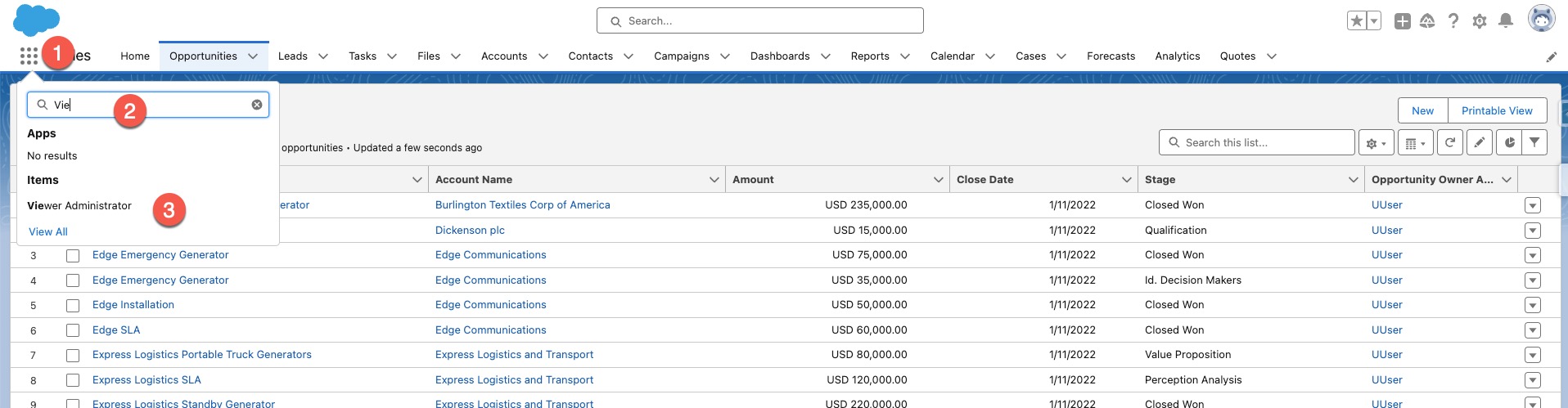
Setup: Prepare Your Template
Before writing Apex, create your document template in Viewer:
- Open Viewer → Templates
- Create or select an existing template
- Copy the Template ID from the URL:
viewer2__Template__crecord ID - Note the Primary Object (Account, Opportunity, etc.)
- Verify template renders correctly with test data
Finding Your Template ID
In Salesforce:
- Go to Viewer → Templates
- Open your template
- The URL shows:
/lightning/r/viewer2__Template__c/a0X... - The ID after
a0X...is your Template ID
Or query directly:
List<viewer2__Template__c> templates = [
  SELECT Id, Name
  FROM viewer2__Template__c
];
Basic Implementation
Simple Document Generation
public class BasicDocumentGeneration {

    public static void createDocument(String recordId, String templateId) {
        // Create request
        viewer2.viewerInvocable2.Request req = new viewer2.viewerInvocable2.Request();
        req.recordId = recordId;           // Salesforce record (Account, Opportunity, etc.)
        req.paramString = templateId;       // Template ID from Viewer

        // Execute request
        List<viewer2.viewerInvocable2.Request> requests =
            new List<viewer2.viewerInvocable2.Request>{ req };
        List<viewer2.viewerInvocable2.Response> responses =
            viewer2.viewerInvocable2.execute(requests);

        // Check response
        if (responses != null && responses.size() > 0) {
            viewer2.viewerInvocable2.Response response = responses[0];
            System.debug('Document generated: ' + response);
        }
    }
}
Output: Document generated and returned in response object
Production-Ready Implementation
Complete Example with Error Handling
public class ProductionDocumentGeneration {

    /**
     * Generate a document with comprehensive error handling
     * @param recordId - The Salesforce record ID
     * @param templateId - The Template ID from Viewer
     * @return DocumentResult - Result object with success/error details
     */
    public static DocumentResult createDocument(String recordId, String templateId) {
        DocumentResult result = new DocumentResult();

        try {
            // Validate inputs
            if (String.isBlank(recordId) || String.isBlank(templateId)) {
                result.isSuccess = false;
                result.errorMessage = 'Record ID and Template ID are required';
                return result;
            }

            // Create request
            viewer2.viewerInvocable2.Request req = new viewer2.viewerInvocable2.Request();
            req.recordId = recordId;
            req.paramString = templateId;

            // Execute
            List<viewer2.viewerInvocable2.Request> requests =
                new List<viewer2.viewerInvocable2.Request>{ req };
            List<viewer2.viewerInvocable2.Response> responses =
                viewer2.viewerInvocable2.execute(requests);

            // Process response
            if (responses == null || responses.isEmpty()) {
                result.isSuccess = false;
                result.errorMessage = 'No response received from Viewer';
                return result;
            }

            viewer2.viewerInvocable2.Response response = responses[0];

            // Check for errors in response
            if (response.isSuccess) {
                result.isSuccess = true;
                result.documentId = response.documentId;
                result.documentUrl = response.documentUrl;
                System.debug('Document created successfully: ' + response.documentId);
            } else {
                result.isSuccess = false;
                result.errorMessage = response.errorMessage;
                System.debug('Document generation failed: ' + response.errorMessage);
            }

        } catch (Exception e) {
            result.isSuccess = false;
            result.errorMessage = 'Error generating document: ' + e.getMessage();
            System.debug(LoggingLevel.ERROR, 'Document generation exception: ' + e.getStackTraceString());
        }

        return result;
    }

    /**
     * Result wrapper class
     */
    public class DocumentResult {
        public Boolean isSuccess = false;
        public String documentId;
        public String documentUrl;
        public String errorMessage;
    }
}
Usage Example
// Simple usage
String accountId = '001xx000003DH1';
String templateId = 'a0Xxx0000012AB0';

ProductionDocumentGeneration.DocumentResult result =
    ProductionDocumentGeneration.createDocument(accountId, templateId);

if (result.isSuccess) {
    System.debug('Document: ' + result.documentUrl);
} else {
    System.debug('Error: ' + result.errorMessage);
}
Advanced Patterns
Bulk Document Generation
For processing multiple records:
public class BulkDocumentGeneration {

    /**
     * Generate documents for multiple records.
     * Returns the same DocumentResult type as ProductionDocumentGeneration
     * so results can be processed uniformly.
     */
    public static List<ProductionDocumentGeneration.DocumentResult> createDocuments(
        List<String> recordIds,
        String templateId
    ) {
        List<ProductionDocumentGeneration.DocumentResult> results =
            new List<ProductionDocumentGeneration.DocumentResult>();
        List<viewer2.viewerInvocable2.Request> requests =
            new List<viewer2.viewerInvocable2.Request>();

        // Build all requests
        for (String recordId : recordIds) {
            viewer2.viewerInvocable2.Request req =
                new viewer2.viewerInvocable2.Request();
            req.recordId = recordId;
            req.paramString = templateId;
            requests.add(req);
        }

        // Execute all at once
        List<viewer2.viewerInvocable2.Response> responses =
            viewer2.viewerInvocable2.execute(requests);

        // Process responses
        for (viewer2.viewerInvocable2.Response response : responses) {
            ProductionDocumentGeneration.DocumentResult result =
                new ProductionDocumentGeneration.DocumentResult();
            result.isSuccess = response.isSuccess;
            result.documentId = response.documentId;
            result.errorMessage = response.errorMessage;
            results.add(result);
        }

        return results;
    }
}
Scheduled Document Generation
For nightly or periodic document creation:
/**
 * Scheduled class for periodic document generation
 * Example: Run nightly to generate invoices
 */
public class ScheduledDocumentGeneration implements Schedulable {

    public void execute(SchedulableContext context) {
        // Get all records that need documents
        List<Opportunity> opps = [
            SELECT Id
            FROM Opportunity
            WHERE IsClosed = true
            AND DocStatus__c = null
            LIMIT 100
        ];

        String templateId = 'a0Xxx0000012AB0'; // Invoice template
        List<String> oppIds = new List<String>();

        for (Opportunity opp : opps) {
            oppIds.add(opp.Id);
        }

        // Generate documents in bulk
        List<ProductionDocumentGeneration.DocumentResult> results =
            BulkDocumentGeneration.createDocuments(oppIds, templateId);

        // Log results
        Integer successCount = 0;
        for (ProductionDocumentGeneration.DocumentResult result : results) {
            if (result.isSuccess) {
                successCount++;
            }
        }

        System.debug('Generated ' + successCount + ' documents');
    }
}
Schedule it:
// Run nightly at 2 AM
String scheduleExpr = '0 0 2 * * ?';
String jobId = System.schedule('Generate Invoices', scheduleExpr,
    new ScheduledDocumentGeneration());
Use Cases
Viewer already includes a built-in invocable action available in Salesforce Flow — you do not need to create your own. See Trigger Flow to Create Viewer Document for setup instructions.
1. Auto-Generate on Record Creation
trigger OpportunityDocumentTrigger on Opportunity (after insert, after update) {
    // Only process newly closed won opportunities
    List<Opportunity> closedWon = new List<Opportunity>();

    for (Opportunity opp : Trigger.new) {
        if (opp.IsClosed && opp.IsWon) {
            closedWon.add(opp);
        }
    }

    if (!closedWon.isEmpty()) {
        // Call document generation asynchronously
        List<String> oppIds = new List<String>();
        for (Opportunity opp : closedWon) {
            oppIds.add(opp.Id);
        }

        String templateId = 'a0Xxx0000012AB0'; // Contract template
        System.enqueueJob(new DocumentGenerationQueueable(oppIds, templateId));
    }
}

/**
 * Queueable for async document generation
 */
public class DocumentGenerationQueueable implements Queueable {

    private List<String> recordIds;
    private String templateId;

    public DocumentGenerationQueueable(List<String> recordIds, String templateId) {
        this.recordIds = recordIds;
        this.templateId = templateId;
    }

    public void execute(QueueableContext context) {
        BulkDocumentGeneration.createDocuments(recordIds, templateId);
    }
}
2. Email Documents to Users
public class EmailDocuments {

    public static void sendDocumentEmail(String recordId, String templateId, String recipientEmail) {
        // Generate document
        ProductionDocumentGeneration.DocumentResult result =
            ProductionDocumentGeneration.createDocument(recordId, templateId);

        if (result.isSuccess) {
            // Send email with document link
            Messaging.SingleEmailMessage email = new Messaging.SingleEmailMessage();
            email.setToAddresses(new String[] { recipientEmail });
            email.setSubject('Your Document is Ready');
            email.setPlainTextBody('Your document is ready to download:\n' +
                result.documentUrl);

            Messaging.sendEmail(new Messaging.SingleEmailMessage[] { email });
        } else {
            System.debug('Document generation failed: ' + result.errorMessage);
        }
    }
}
Best Practices
- Always validate inputs - Check for null/blank IDs before API calls
- Use result wrappers - Create classes to consistently handle responses
- Handle exceptions - Wrap API calls in try-catch blocks
- Log comprehensively - Use System.debug() with log levels
- Test thoroughly - Minimum 75% code coverage for deployment
- Use async processing - For bulk operations, use Queueable or Batch classes
- Monitor governor limits - Each request counts against API limits
Governor Limits
The Viewer API respects Salesforce governor limits:
| Limit | Impact |
|---|---|
| API Calls | Each execute() counts as 1 API call |
| CPU Time | Document rendering uses CPU time |
| Heap Size | Large documents consume heap memory |
| Time Limits | Sync calls have 2s timeout, async has full execution window |
Recommendation: Use batch or queueable for bulk generation (100+ records).
Troubleshooting
Response is null or empty
Causes:
- API call failed silently
- Invalid template ID
- Record doesn't match template's primary object
Solution:
// Verify template exists and matches record type
viewer2__Template__c template = [
  SELECT Id, Primary_Object__c
  FROM viewer2__Template__c
  WHERE Id = :templateId
];

// Verify record exists
SObject record = Database.query('SELECT Id FROM ' +
  template.Primary_Object__c + ' WHERE Id = :recordId');
isSuccess = false but no error message
Cause: Viewer encountered an unhandled exception
Solution:
- Check Viewer logs in Salesforce
- Verify template contains valid field references
- Test template in Viewer UI with same record
- Check field-level security and sharing
Debug:
System.debug(LoggingLevel.DEBUG, 'Full response: ' + JSON.serialize(response));
"Record ID required" error
Cause: Empty or null recordId in request
Solution:
if (String.isBlank(recordId)) {
  throw new IllegalArgumentException('Record ID cannot be blank');
}
req.recordId = recordId.trim(); // Remove whitespace
Testing Your Implementation
Unit Test Example
@isTest
public class DocumentGenerationTest {

    @TestSetup
    static void setupTestData() {
        // Create test account
        Account acc = new Account(Name = 'Test Account');
        insert acc;

        // Create test template
        viewer2__Template__c template = new viewer2__Template__c(
            Name = 'Test Template',
            Primary_Object__c = 'Account'
        );
        insert template;
    }

    @isTest
    static void testCreateDocument() {
        Account acc = [SELECT Id FROM Account LIMIT 1];
        viewer2__Template__c template = [SELECT Id FROM viewer2__Template__c LIMIT 1];

        Test.startTest();
        ProductionDocumentGeneration.DocumentResult result =
            ProductionDocumentGeneration.createDocument(acc.Id, template.Id);
        Test.stopTest();

        System.assertEquals(true, result.isSuccess,
            'Document should generate successfully');
        System.assertNotEquals(null, result.documentId,
            'Document ID should not be null');
    }

    @isTest
    static void testCreateDocumentWithInvalidId() {
        Test.startTest();
        ProductionDocumentGeneration.DocumentResult result =
            ProductionDocumentGeneration.createDocument('invalid', 'invalid');
        Test.stopTest();

        System.assertEquals(false, result.isSuccess,
            'Should fail with invalid IDs');
        System.assertNotEquals(null, result.errorMessage,
            'Error message should be provided');
    }
}
More resources
Additional Resources
- Test with your templates before production
- Implement error handling for your use case
- Consider async patterns for bulk operations
- Monitor Viewer logs for any issues